Mobile Robotics · Embedded Autonomy
Ackermann Robot Bring-Up & Native Autonomy
Recruiter summary
- Built: A safety-gated Ackermann robot stack spanning STM32/C30D bring-up, native supervision, multi-sensor capture, odometry, and mapping.
- Validated: Calibrated motion primitives, repeated route execution, C30D feedback framing, sensor capture, and offline mapping tools.
- Why it matters: Demonstrates ownership across undocumented embedded hardware, safe physical testing, systems software, and autonomy foundations.
Overview
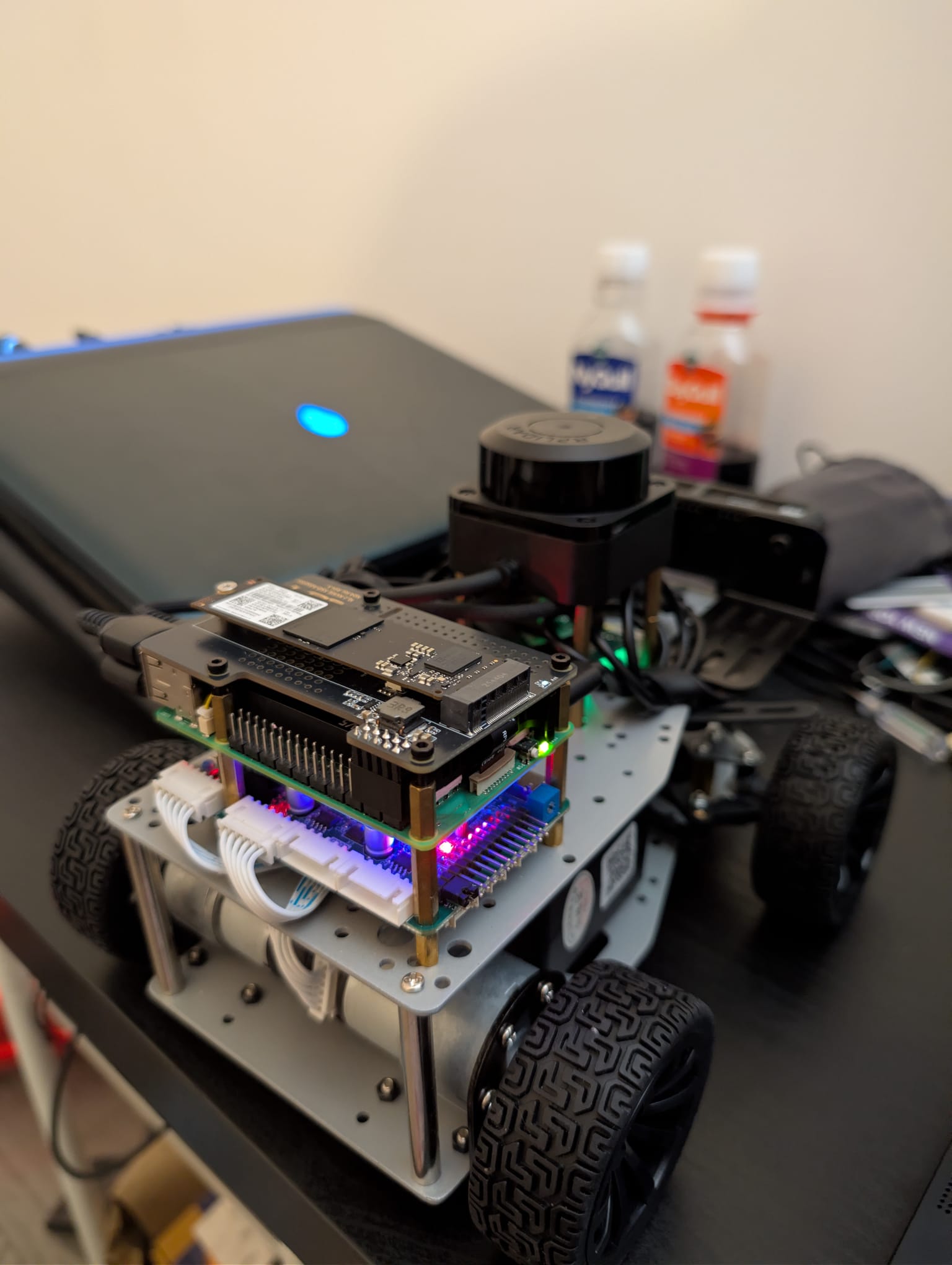
This is one continuous hardware-and-software project: I first brought up the robot’s STM32-based C30D controller and established safety-gated motor, steering, encoder, and route control, then expanded the platform into a native, non-ROS autonomy stack. A Raspberry Pi 5 owns low-level supervision, safety, hardware interfaces, and logging, while a Jetson Orin Nano provides additional compute for vision, mapping, and future learned navigation workloads.
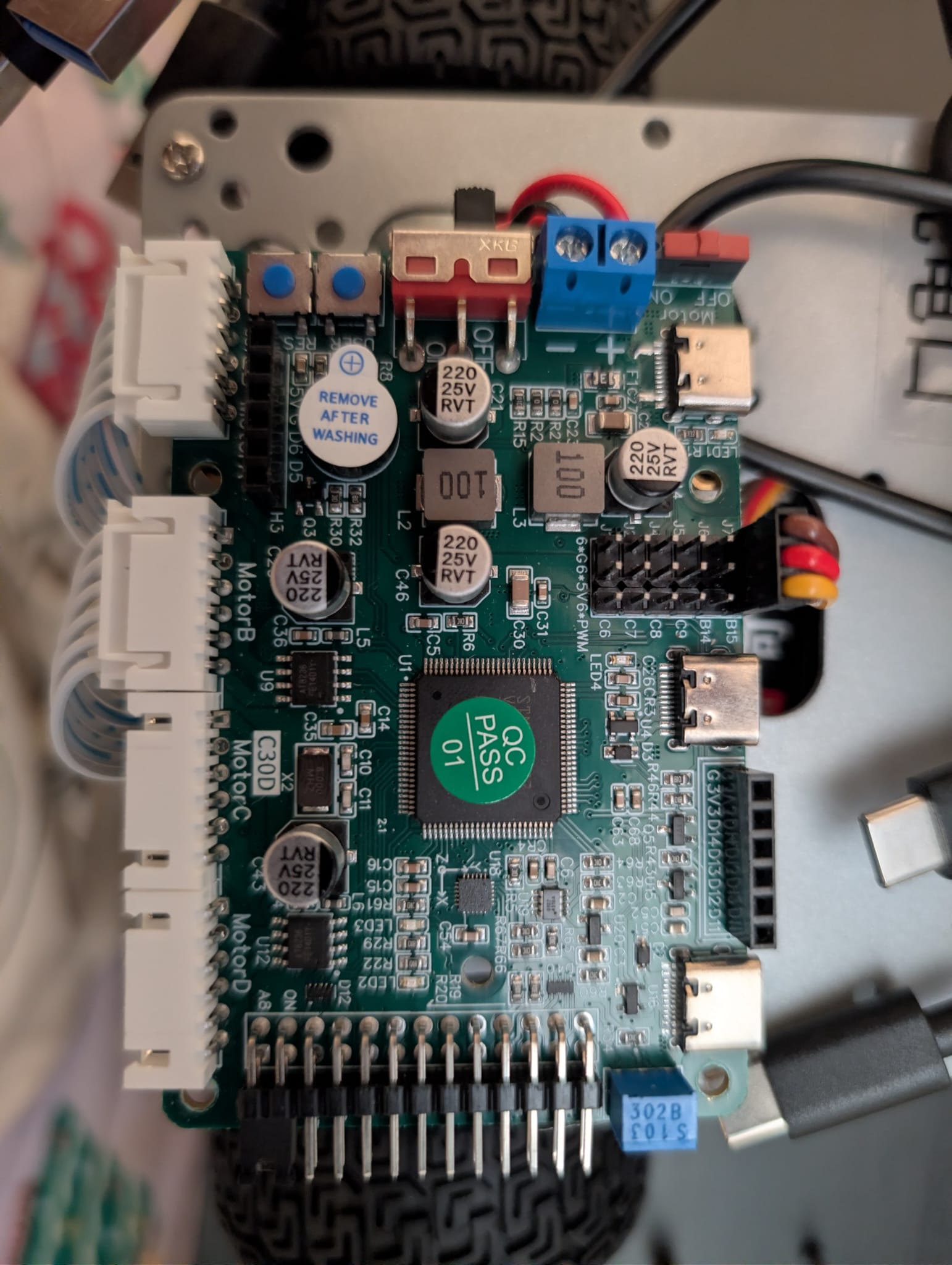
The platform integrates an OAK-D Lite RGB-D camera, an RPLIDAR C1, and a C30D controller connected to the drive motors, steering servo, wheel encoders, and onboard IMU. The repository captures the engineering path from hardware discovery and passive protocol analysis through guarded control experiments, provisional odometry, synchronized sensor recording, and occupancy-grid generation.
System Architecture
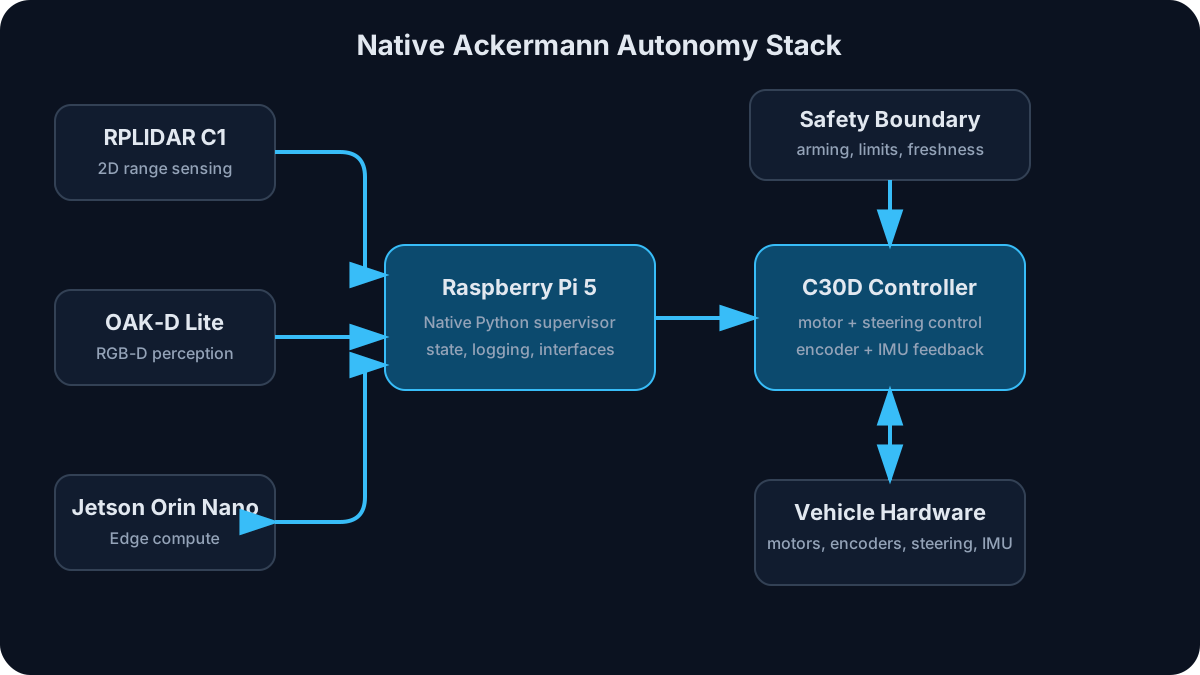
The architecture keeps the safety boundary local to the Raspberry Pi. Commands from higher-level autonomy components must pass through freshness checks, motion limits, and explicit arming gates before reaching the vehicle controller.
My Contribution
- Structured the native Python stack around separate driver, control, state, odometry, mapping, communication, and utility layers.
- Implemented a mock-backed robot supervisor with command filtering, stale-data handling, and conservative motion limits.
- Built passive C30D serial-capture and frame-analysis tools without requiring motor or steering writes.
- Confirmed the feedback frame delimiters and XOR checksum, then developed candidate field decoders for motion, yaw, IMU, and battery data.
- Added bounded RPLIDAR and OAK-D capture utilities plus synchronized read-only sensor-run recording.
- Implemented offline run validation, lidar visualization, ray-traced occupancy grids, and provisional straight-line dead reckoning.
- Developed guarded diagnostic utilities for neutral-frame and low-speed command research with explicit physical-safety requirements.
- Reverse-engineered motor, steering, and electrical-polarity mappings through controlled hardware tests and STM32 documentation.
- Configured the timer, PWM, encoder, GPIO, build, and SWD-flashing path needed for deterministic low-level actuation.
- Built calibrated Raspberry Pi motion primitives and a route executor, then logged repeated multi-segment runs.
STM32/C30D Bring-Up and Route Validation
The C30D is the robot’s STM32-based integrated vehicle controller. Initial bring-up required identifying its motor, steering-servo, encoder, IMU, power, and host communication paths before higher-level autonomy work could proceed.
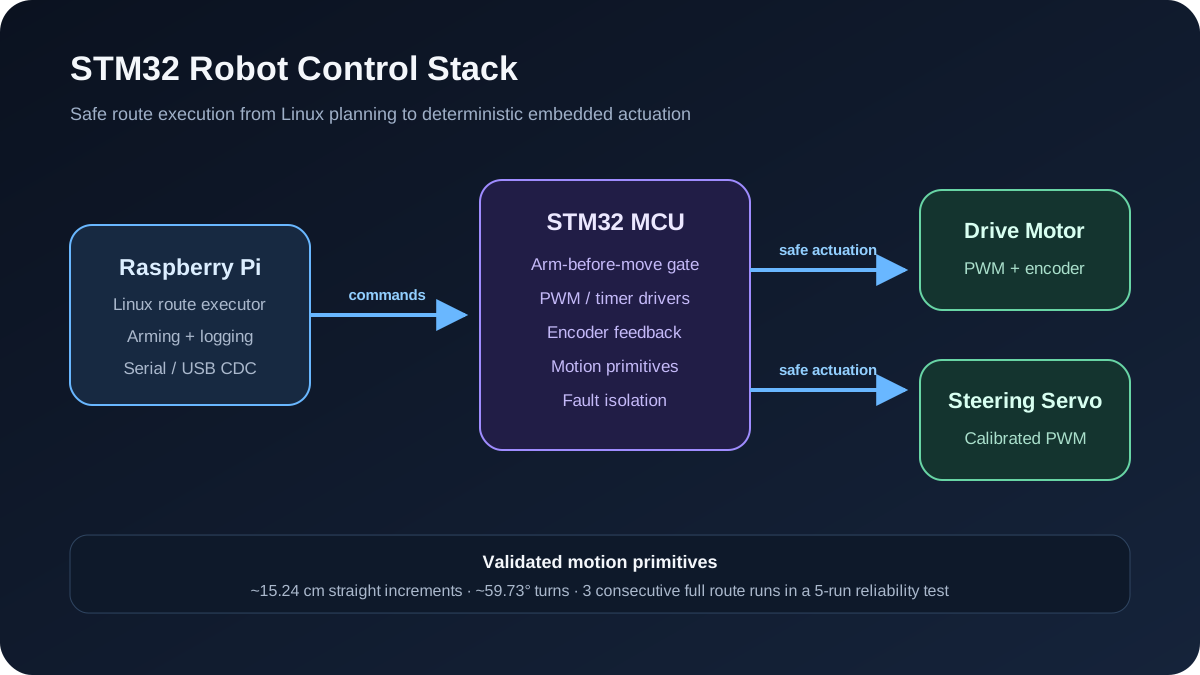
Two faults illustrate the system-level debugging involved:
- A timer-prescaler value of 83 prevented the steering servo from responding. Correcting it to 15 restored the intended PWM timing.
- Intermittent USB serial command corruption initially appeared mechanical. Reproducible logs isolated the fault to communication rather than the drivetrain.
The calibrated bring-up path produced the following results in its controlled test setup:
| Test | Observed result |
|---|---|
| Straight motion primitive | Approximately 15.24 cm increments |
| Turn primitive | Approximately 59.73 degrees |
| Drift | Near zero in the calibrated setup |
| Route reliability exercise | 3 consecutive full runs within a 5-run test |
These measurements validate the original safety-gated command path and calibrated primitives under the tested conditions. They are not a full statistical characterization across surfaces, payloads, battery states, or controller modes. The newer native Python stack extends that work toward a generalized sensor and autonomy architecture; its broader C30D command interface remains under validation.
Safety-First Control
The software defaults to dry-run operation. The main supervisor currently composes a safety manager, command filter, robot state, and mock C30D driver; serial writes remain disabled in the standard configuration.
Safety mechanisms include:
- limits on forward speed, reverse speed, steering angle, acceleration, and test duration;
- manual-enable and wheels-lifted requirements for hardware experiments;
- neutral-command defaults and safe-stop behavior for stale inputs;
- battery, checksum, and serial-feedback readiness checks; and
- finite test sequences with an explicit manual power-cutoff requirement.
These constraints allow protocol and sensor work to progress without presenting the repository as a ready-to-deploy autonomous driving package.
C30D Protocol Investigation
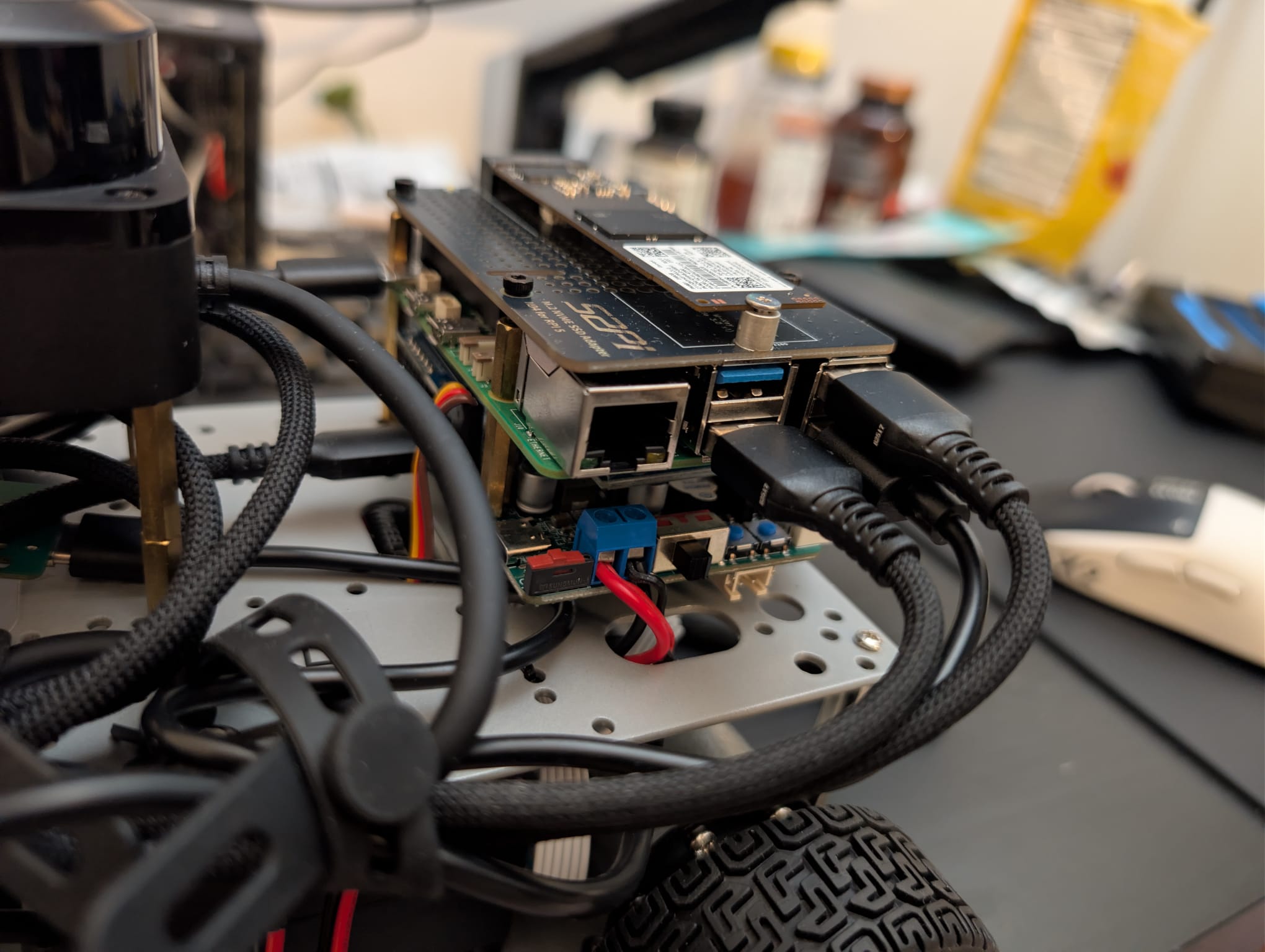
Passive captures established a fixed 24-byte feedback frame with 0x7B and 0x7D delimiters. The checksum is the XOR of bytes 0 through 21 and is stored at byte 22. Offline tools extract valid frames, compare payload variation across experiments, export candidate fields, and plot time series.
Reference firmware also informed an 11-byte host-command candidate. The frame representation is implemented, but drive and steering behavior remains under validation because controller mode, active UART path, and board-variant behavior can affect the hardware response. The project deliberately labels inferred fields and experimental commands rather than treating them as confirmed interfaces.
Current Status
| Capability | Status |
|---|---|
| Native supervisor, state model, configuration, and logging | Implemented |
| Safety evaluation and command filtering | Implemented and unit tested |
| Passive C30D feedback capture and checksum validation | Implemented |
| Candidate feedback analysis and plotting | Implemented |
| RPLIDAR and OAK-D bounded capture | Implemented |
| Sensor-run validation, replay, and occupancy grids | Implemented |
| Straight-line dead reckoning | Provisional; calibration required |
| Calibrated STM32/C30D motion primitives and route execution | Validated in the documented test setup |
| Generalized native Python C30D drive and steering interface | In validation |
| Multi-sensor SLAM and autonomous navigation | Planned |
Engineering Takeaways
- Unknown embedded interfaces should be approached through passive observation and bounded bring-up tests before broader actuation.
- Safety gates belong near the hardware boundary, not only in high-level autonomy code.
- Candidate protocol fields must stay explicitly labeled until controlled experiments establish their physical meaning.
- Unified capture and offline replay make sensor and state-estimation work testable without repeatedly operating the robot.
- Separating real hardware drivers from control logic makes meaningful mock-based testing possible.
- Build, flash, serial, electrical, and mechanical behavior must be debugged as one system when failures cross subsystem boundaries.
Technical Stack
Python · Embedded C · Raspberry Pi 5 · Jetson Orin Nano · STM32/C30D vehicle controller · PWM/timers · quadrature encoders · SWD/ST-Link · OAK-D Lite · RPLIDAR C1 · serial protocols · RGB-D perception · occupancy grids · dead reckoning · pytest · YAML configuration
Next Steps
- Complete repeatable steering and longitudinal-command validation.
- Calibrate wheel motion and yaw feedback against measured chassis motion.
- Fuse encoder, IMU, and lidar observations for planar localization.
- Add scan matching and pose-aware occupancy mapping.
- Connect Jetson perception through a bounded, freshness-checked command interface.
- Evaluate closed-loop waypoint following and obstacle-aware planning.
Continue Exploring
See another system
Interested in the engineering behind this work? I am available to discuss robotics software, embedded systems, autonomy, controls, and robot-learning opportunities.